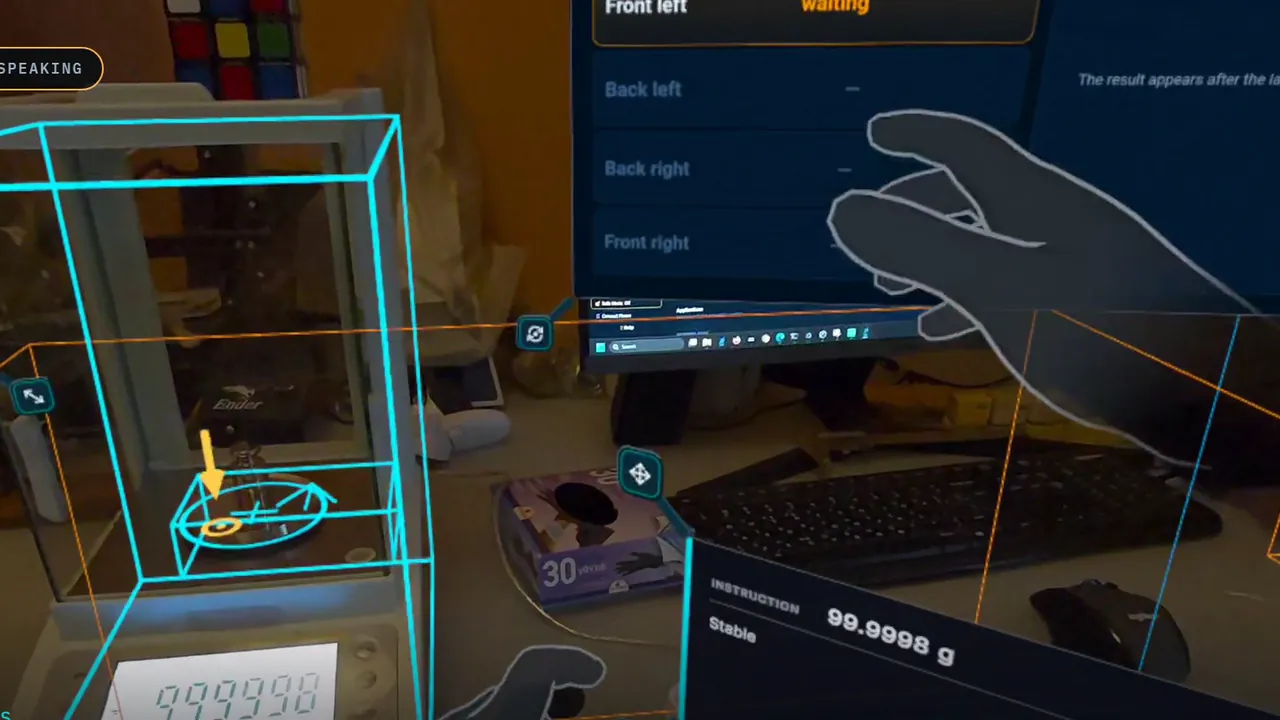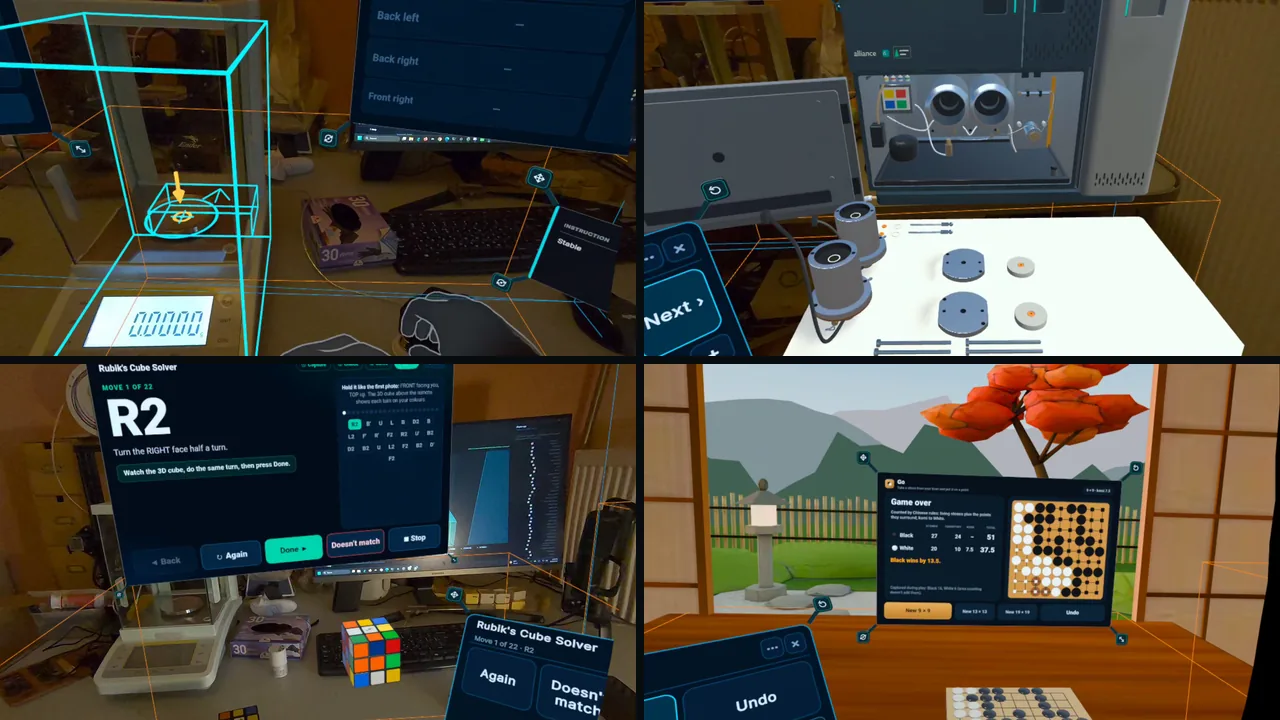
A balance eccentricity test, guided by Claude in a headset.
One spoken request. The PC reads a real analytical balance to 0.1 mg over a USB cable; Claude holds the test until both hands are gloved, then checks the working and gives its own verdict.
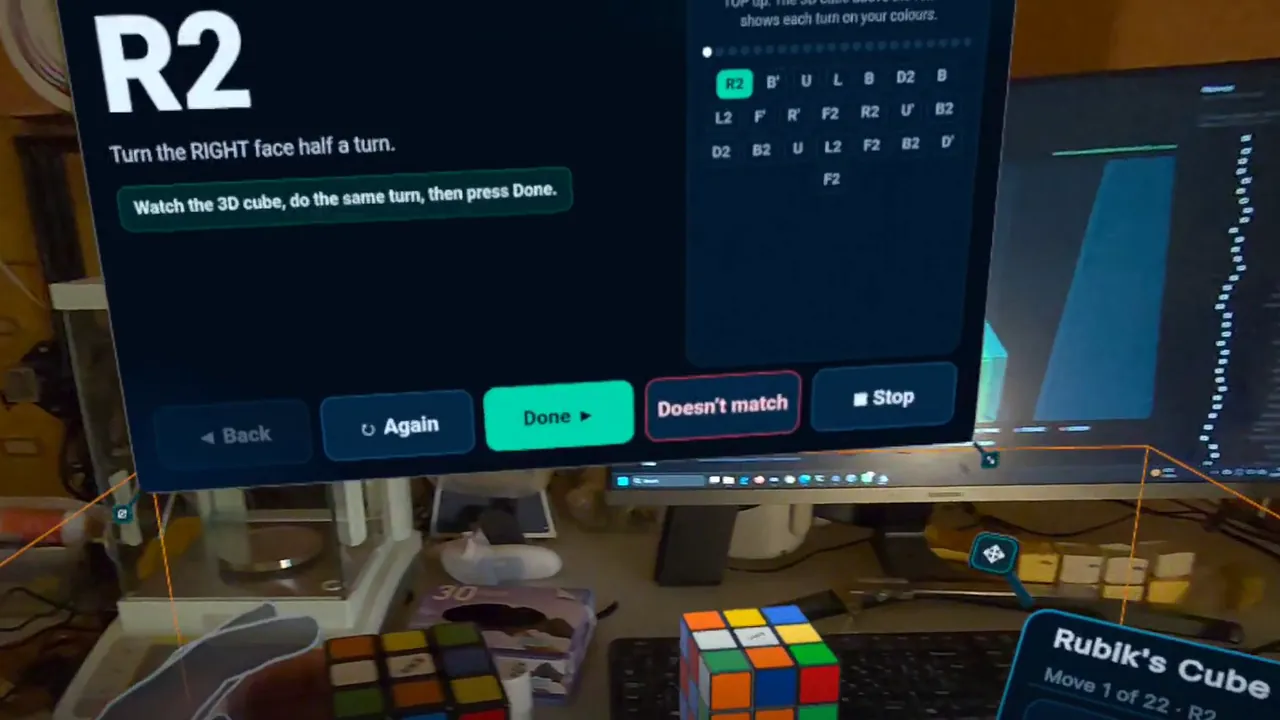
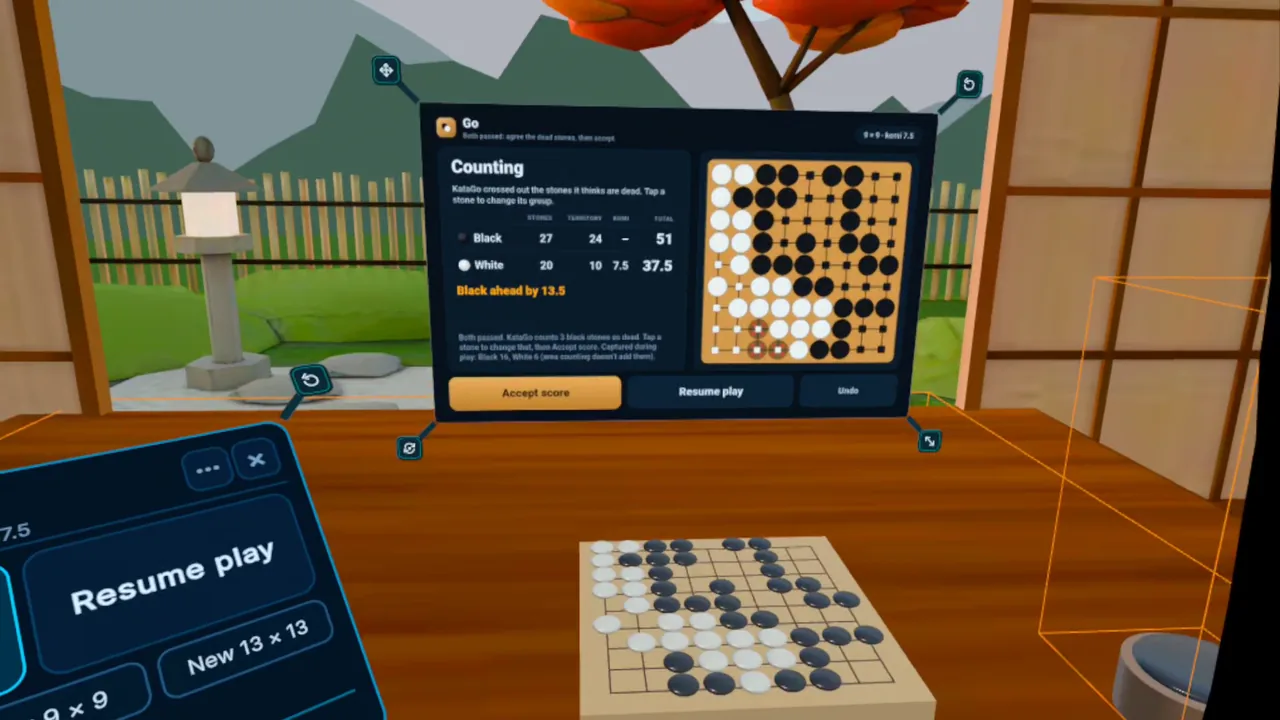
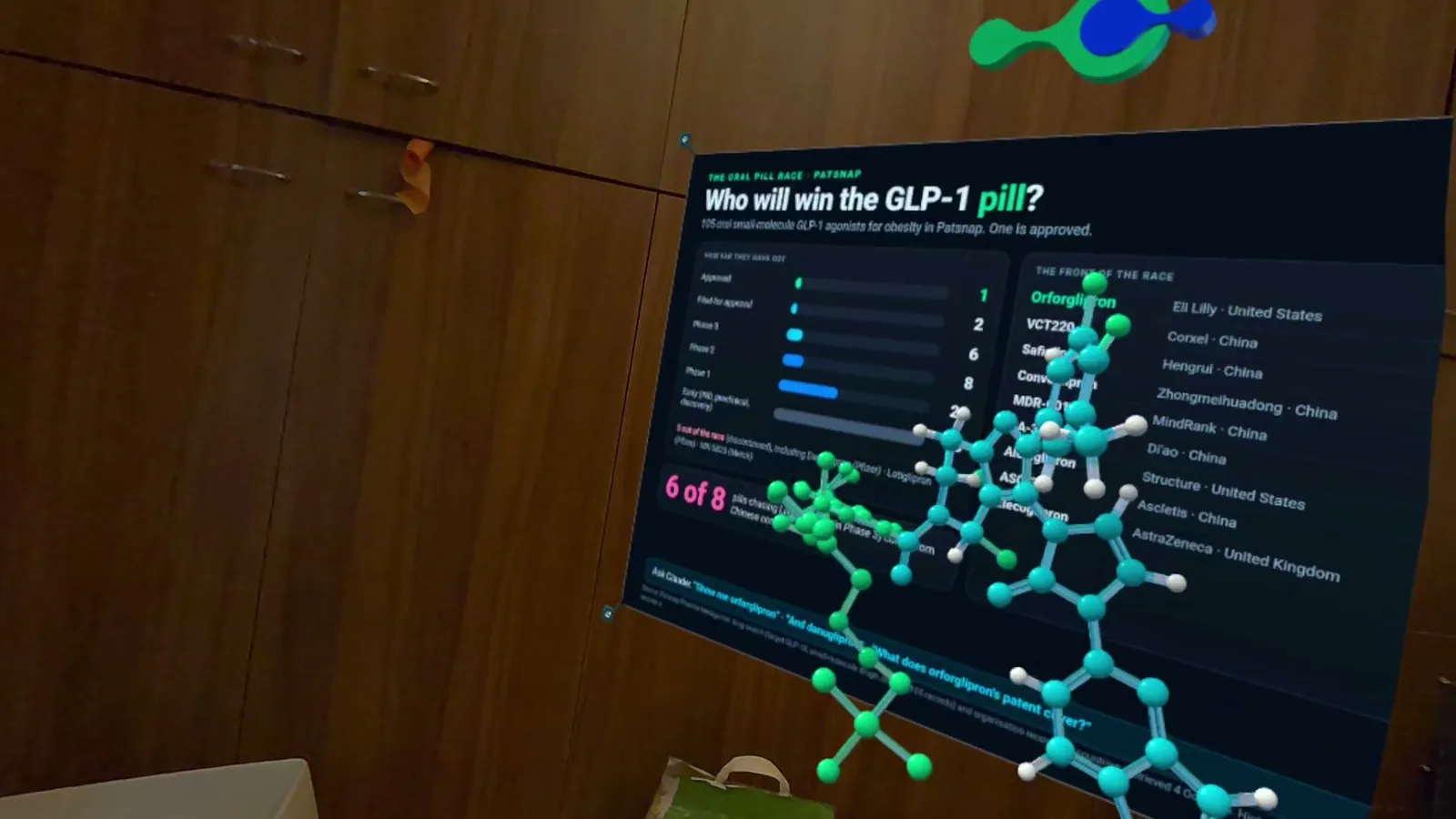
Four spoken requests to Claude in Alepou, four headset apps: an instrument procedure, a service procedure, a puzzle and a game. The headset runs one app that never changes; each app is built by AI agents on your own computer.
How it was made: the apps were built first; for the film the requests were asked again, and each answer cuts to that app’s own headset recording, with Claude’s replies spoken by the headset’s text-to-speech voice.
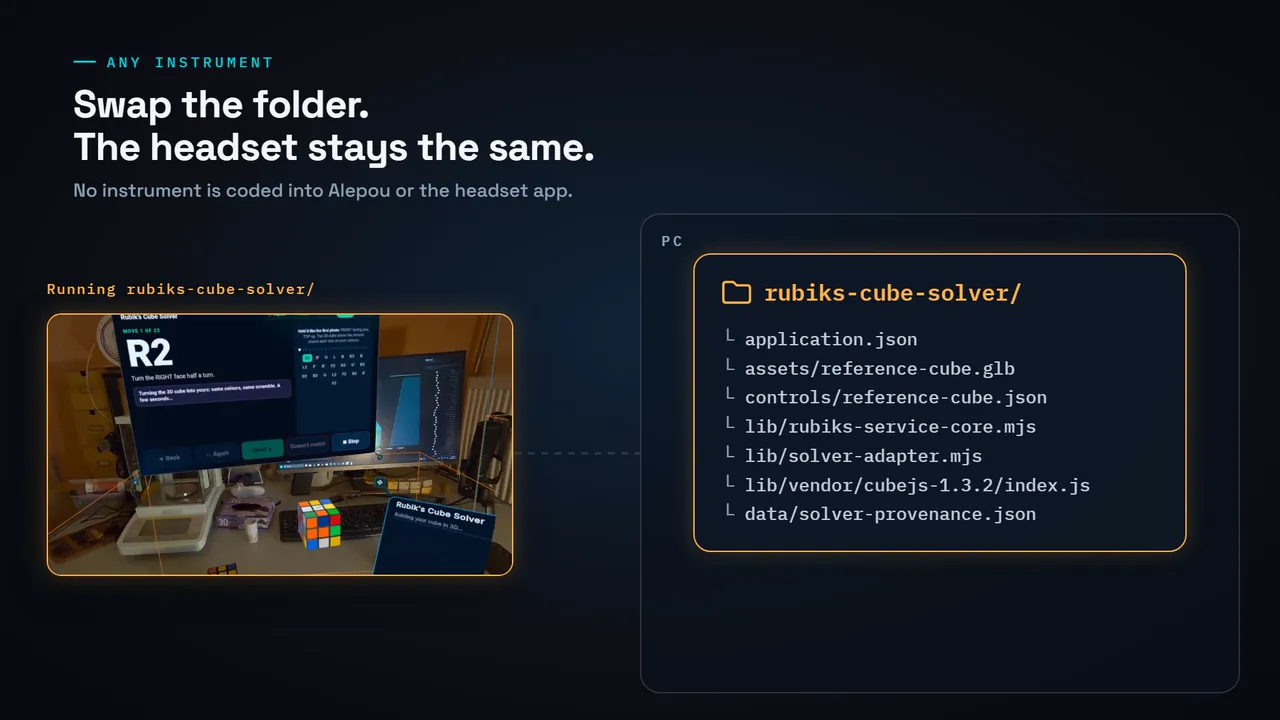
Each app (a lab procedure, a puzzle, a game) is a folder of plain files, built by AI agents in sessions Alepou supervises on your PC. Real instruments, such as the balance below, are read by the PC. Swap the folder and the headset stays the same.
One spoken request. The PC reads a real analytical balance to 0.1 mg over a USB cable; Claude holds the test until both hands are gloved, then checks the working and gives its own verdict.
VARLIS reproduces the instrument, its controls, and the workflow around it so customers and technical teams can rehearse important procedures before working on expensive equipment.
Help people practise critical procedures before they touch the real equipment. Start with one instrument, one workflow, and an evaluation shaped with your training team.
The learner opens the draught shield, handles the calibration weight, follows the instrument software, and reads the result in the correct sequence—without risking the physical balance.
VARLIS™ is built by a PhD chemist and trained scientific-instrument engineer with hands-on experience across analytical laboratories, instrument systems, XR, and software development.
That combination connects accurate scientific content with the practical details operators need to see, understand, and remember. About VARLIS ↗